Study: Calabash trees: evolution, geography, domestication and uses of Crescentia in the Carribean
Common Rue is a species of Ruta grown as an ornamental plant and herb. It is native to the Balkan Peninsula. It is now grown throughout the world in gardens, especially for its bluish leaves, and sometimes for its tolerance of hot and dry soil conditions. It is also cultivated as a medicinal herb, as a condiment, and to a lesser extent as an insect repellent.
Audio:
Video:
Kate Douthat
“Wild Bergamot”
Rutgers, The State University of New Jersey
Locale: New Jersey
Study: Plant communities of stormwater detention basins in New Jersey–their landscapes and local drivers
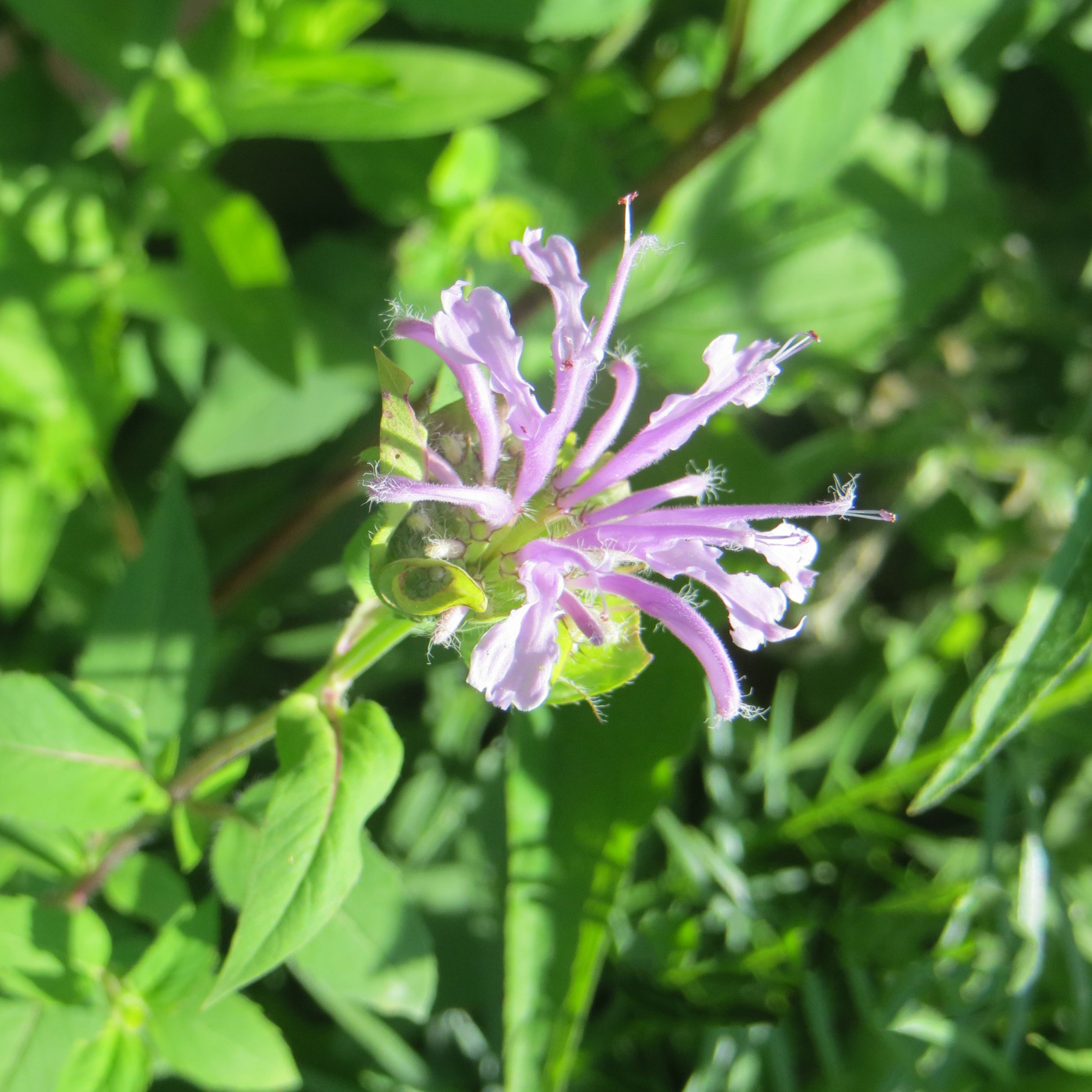
Wild Bergamot is a wildflower in the mint family (Lamiaceae) widespread and abundant as a native plant in much of North America. This plant, with showy summer-blooming pink to lavender flowers, is often used as a honey plant, medicinal plant, and garden ornamental. The species is quite variable, and several subspecies or varieties have been recognized within it.
Audio:
Video:
Lynnaun Johnson
“Vanilla Orchid”
The Chicago Botanic Garden and Northwestern University
Locale: Illinois
Study: Phorophyte specificity of the Ghost Orchid and potential rarity of Mycorrhizal fungi drivers
Vanilla Orchid is found in Mexico, Central America, the Caribbean, and northeastern South America. It prefers hot, wet, tropical climates. It is cultivated and harvested primarily in Veracruz, Mexico and in Madagascar.
Audio:
Video:
Toby Liss
“Creeping Juniper”
SUNY College of Environmental Science and Forestry
Locale: New York
Study: Plant assemblage diversity affecting green roof function.
Creeping Juniper is a low-growing shrubby juniper native to northern North America, throughout most of Canada from Yukon east to Newfoundland, and in the United States in Alaska, and locally from Montana east to Maine, reaching its furthest south in Wyoming and northern Illinois. Well over 100 different cultivars have been selected for use as ornamental plants in gardens.
Audio:
Video:
Sarick Matzen
“Lousewort”
University of California, Berkeley
Locale: California
Study: Plant-based soil remediation: the effects of soil characteristics on arsenic uptake in Pteris vittata.
These low, semi-parasitic plants get some of their nourishment from the roots of other plants. The flower color and the finely cut foliage are distinctive. The genus name, from the Latin pediculus (a louse), and the common name Lousewort, refer to the misconception once held by farmers that cattle and sheep become infested with lice when grazing on the plants.
Audio:
Video:
Nicole Tiernan
“Coffea Arabica”
Florida International University
Locale: Florida
Study: Systematics and conservation of endemic Caribbean island Plumeria
Coffea Arabica is believed to be the first species of coffee to be cultivated, and is the dominant cultivar, representing some 60% of global production. Coffea Arabica’s first domestication in Ethiopia is obscure, but cultivation in Yemen is well documented by the 12th century.