Study: Integrating diverse knowledge of lemur-plant interactions to advance rainforest habitat restoration
Musa is one of two or three genera in the family Musaceae. The genus includes flowering plants producing edible bananas and plantains. Around 70 species of Musa are known, with a broad variety of uses.
Audio:
Video:
David Felipe Rodríguez Mora
Nettle “Urera Laciniata”
University of Texas at San Antonio
Locale: Colombia
Study: Conservation and Sustainable Management of the Cofán Shamanism Yagé Lianas
This member of the nettle family grows into a shrub about 3-8ft tall. It is native to Central and South Tropical America in the wet tropical biome. Its stinging hairs are used as a medicine and in shamanistic practice.
Audio:
Video:
Richard Hull
“Snow Trillium”
Indiana University
Locale: Indiana
Study: Identifying changes in the Wabash River’s vascular plant flora
This trillum is a small wildflower that grows in biologially diverse forests in the Midwestern US. It only grows 3-4 inches tall, but has a showy bloom. One of the first blooms in spring with a three pedaled white flower, this flower is host to bees and other pollinators.
Audio:
Video:
Viviana Londoño-Lemos
“Beach Spider Lily”
University of Minnesota
Locale: Columbia
Study: Exploring the value of tropical dry forest soil seed banks
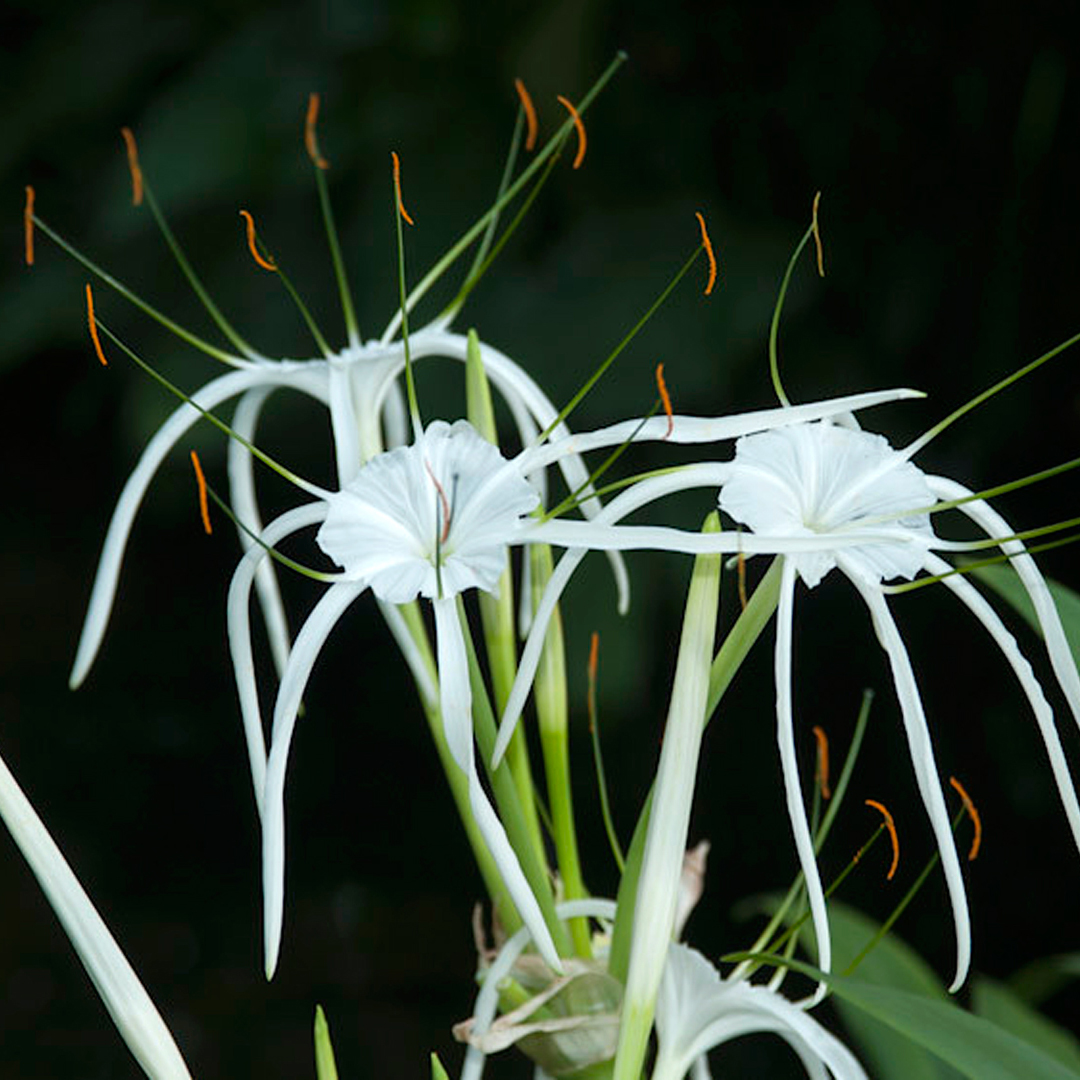
This lily grows across Latin America in coastal dry conditions. From the large leaf cluster underneath, 4 to 6 large white flowers bloom from mid-summer to late fall. The blooms open up imitating large, white spiders with long, slender pedals.
Audio:
Video:
Naomi Miller
“Jack in the Pulpit”
Lehigh University
Locale: Pennsylvania
Study: Exploring the interactions between canopy gaps and invasive plant communities in northeastern hardwood forests
Jack in the Pulpit is a three leaflet forest floor plant about 2 ft tall. The blossom grows on a separate stalk green with brown stripes. In spring, the blooms in the stalk are small greenish-white and mature to red berries later in the season.
Audio:
Video:
Lauren Nerfa
“Olena”
The University of Hawai’i at Mānoa
Locale: Hawai’i
Study: Human dimensions and ecological outcomes of long-term forest restoration
Olena is a flowering plant, Curcuma longa of the ginger family, Zingiberaceae, the roots of which are used in cooking. The plant is a perennial, rhizomatous, herbaceous plant native to the Indian subcontinent and Southeast Asia, that requires temperatures between 68 and 86 °F and a considerable amount of annual rainfall to thrive. The rhizomes are used fresh or boiled in water and dried, after which they are ground into a deep orange-yellow powder commonly used as a coloring and flavoring agent in many Asian cuisines, especially for curries, as well as for dyeing. Turmeric powder has a warm, bitter, black pepper-like flavor and earthy, mustard-like aroma.
Audio:
Video:
Lydia Soifer
“Resurrection Fern”
University of Florida
Locale: Panama
Study: Unraveling the impact of microclimates on the biogeography of epiphytes
This fern grows on top of other plants and structures off of the forest floor. The fronds grow between 4 and 12 inches in length. It reproduces by spores and can withstand severe drought, losing as much as 97 percent of its water mass and still surviving after the drought ends.